Wednesday, 4 June 2014

Home Made Natural Cleaning Products


Baking Soda:

Baking soda works as a mild abrasive, helping to gently scrub things that need to be scrubbed, but not scratched. Baking soda also works well to remove smelly odors, making it a prime candidate for a bathroom and kitchen cleaner. Baking soda also works to removes stains, and can be used to help soften laundry.

Borax:

Borax is a laundry booster that can be used in a few different ways around the house. Borax is actually a natural mineral, but can be an irritant on skin, and shouldn't be ingested. Borax can be used as a stain remover and a substitute for bleach. Borax can also be used to repel insects, although care should be used around pets and small children.

Castile Soap:

Castile soap is an oil based soap, that can be used to clean almost anything in your home. Diluted liquid castile soap can be used as an all-purpose cleaner.Liquid castile soap is an excellent degreaser.

Cornstarch:

Cornstarch can be used as a starching solution for clothing. Cornstarch also absorbs oils and greases, making it a great help in the laundry room or for stains on countertops.

Essential Oils:

Essential oils help add a pleasing scent to homemade cleaning solutions. Be careful when using essential oils. A little goes a long way. There are people with high sensitivities to essential oil fragrances.

Lemons and Lemon Juice:

Lemons can be great for scrubbing copper bottom pots. The juice works to clean and shine the pans. Lemon juice is a natural bleach, especially when combined with the sun. Lemon juice is a natural degreaser, which comes in handy with dishes.

Salt:

Salt is an abrasive solution for scrubbing. Use salt to get rid of rust and mildew. Salt also works to help polish copper and silver.

Toothpaste:

Toothpaste works as a very mild abrasive, similar to soft scrubbing gel solutions. Toothpaste can be used to clean silver. It can also be used to remove stains on white clothing, tennis shoes, and in many other places where a light scrubbing is needed.

Vinegar:

Vinegar can be used as a fabric softener in the rinse cycle of your washing machine. Vinegar makes a great all-purpose cleaner. Mopping with vinegar is an inexpensive way to keep your floors clean. Vinegar is a great stain remover. Vinegar carefully combined with baking soda, makes a great foaming toilet cleaner.

Hydrogen Peroxide:

Hydrogen peroxide can be used as a disinfectant. It also is one of the most effective blood stain removers.
With all of these ingredients, be careful about mixing cleaners together. Use new clean bottles. Follow storage guidelines for cleaners. Rinse thoroughly, and always follow instructions.

Sunday, 6 April 2014

Why Shop Locally

In case you needed some reaons: Here is our top 7. Enjoy!

1. Your spending will boost the local economy &  housing


Research on spending by local authorities shows that for every $1 spent with a small or medium-sized business $0.63 stayed in the local economy, compared to $0.40 with a larger business.
Did you know that streets populated with thriving independent businesses have been shown to boost the price of nearby homes. So in a way, shopping local is an investment in your investment. Cool

2. It is the ethical & the healthy choice

Buying out-of-season produce, like strawberries in December, lowers your eco-credentials. As does eating turkey and carrots that have been flown halfway round the world or wrapped in layers of plastic. When you shop at local butchers, bakers, farm shops and green grocers, it is likely that a decent percentage of the produce has had a short field-to-fork journey. Along with supporting local farmers, it means the food is likely to contain more nutrients and have less packaging.

3. They sell quirky, one-off gifts

Independent shops often stock items which are made locally and aren't available elsewhere: buy a dress by a fledgling designer and there is little chance of turning up to the office Christmas party wearing the same as someone else.

When it comes to gifts, quirky one-off items are a major plus of independent shops. Give your niece or nephew a handmade toy and at least it won't be identical to everything they already have.
Local shops also support local artists and designers, food producers and growers, so you're buying products absolutely unique to your area.

4. You will be supporting Canadian entrepreneurs

Artisan markets help foster the talents of the next generation of Canadian designers and retailers. There is a constant turnover of new products, and sellers listen to customers' demands. If a certain pie filling is popular, for example, a pie company will respond to that and quickly supply more of them – and you can suggest things too, so you can even have a bit of influence over the products on sale.

5. You can help build communities

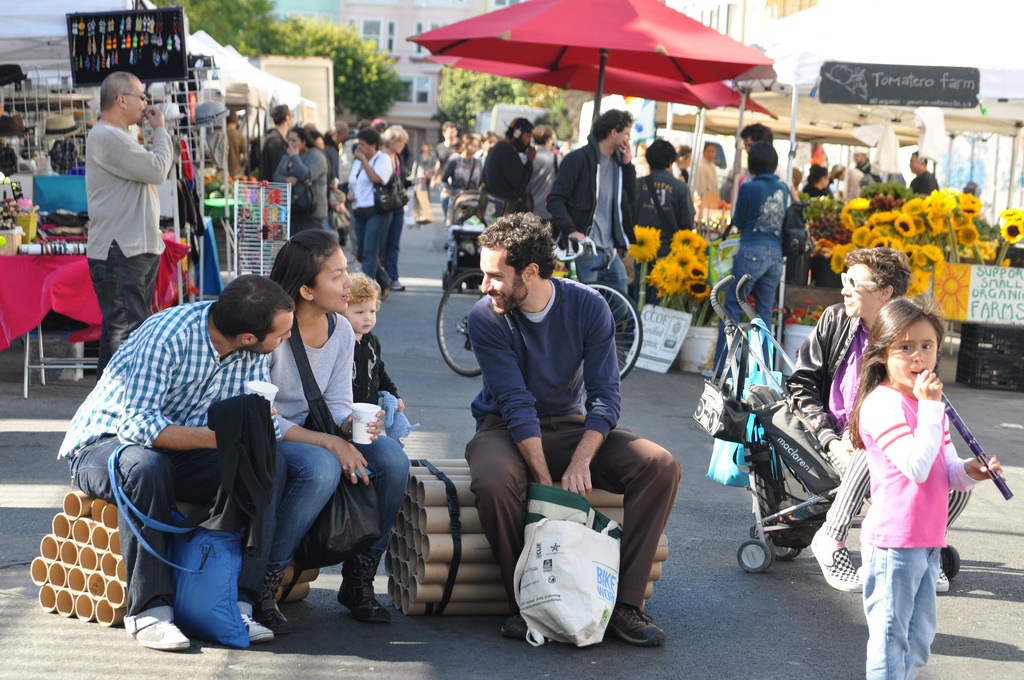
Bookshops, cafes and craft shops often drum up custom by hosting events, from book groups to knitting clubs and children's events. If the businesses are not supported, the local groups tend to disappear too.
Markets also often give space to community groups and social enterprises, says Ellie Gill, campaign manager at Love Your Local Market. "Markets can have a community value, as there is often a social purpose to stalls – they can be public spaces as well as retail outlets."

6. You might get a better deal or some good advice

Local bakers throw in extra bagels for regulars; grocers give informal 10% discounts; and market stall holders are prepared to negotiate on prices. Independent retailers can use their discretion to reward regular custom, and it can mean you get discounts on the items you actually want to buy, rather than being tempted by multi-buy offers in the big chains.

7. You can see it and try before you buy

Major retailers have the advantage of economies of scale and can afford to slash prices and offer reduced costs. However, it's easy to waste money on products you end up not actually liking. When you buy it local you can see touch and smell it, literally. 
Local products can be sampled, easily returned and as in the case with Glass Doctor North Vancouver, comes with a satisfaction guarantee. 

Monday, 24 February 2014

Spring Break 2014 - Camps & Activities for Kids on the North Shore

All schools will be closed from Monday, March 17 through Friday, March 28, 2014.  So what will your kids be doing? Need a camp to send them to, or are you looking for some family fun? We have a complete list of links for both. Enjoy!

Artists for Kids' Day Camps.  We offer full-day art-based camps during Spring Break and the Summer Break for early elementary school-aged students, Kindergarten to Grade 2, and Grade 2 to 4.


Norgate's Spring Break Camp.  Looking for something to keep the kids busy, happy, engaged, and active during Spring Break?  Norgate's Spring Break Camp is just the thing!  For kids aged 5 to 12 (children are placed in age-appropriate groups).

More Spring Break Camps and Activities


Build Your Own Spring Break Camp